One of the Holiest Shrines of Constantinople
Still further south of the Church of the Holy Saviour stood one of the most revered sanctuaries in all Constantinople, the Church of the Theotokos Hodegetria. This famous church was originally founded by the Empress Pulcheria and later restored and enlarged by Emperor Michael III. From early times it held a special place in the religious life of the city and of the Byzantine Empire as a whole.
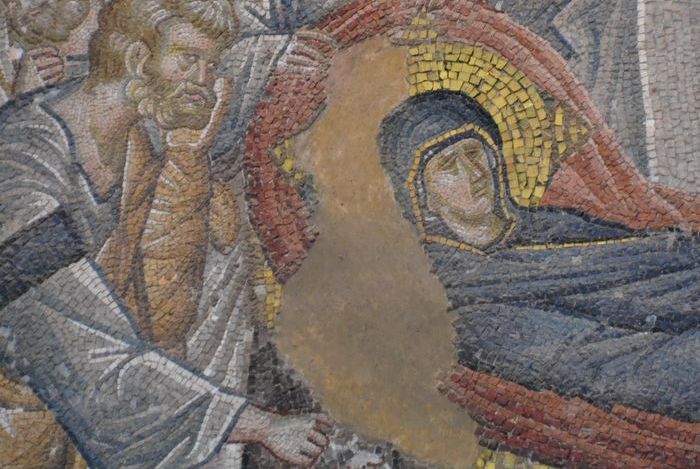
The church was celebrated for its Holy Well, whose waters were believed to work miraculous cures. Pilgrims came from far and wide to seek healing there. Even more important was the church’s most precious treasure: an icon of the Virgin Mary, traditionally attributed to St. Luke the Evangelist. This icon was regarded as the palladium of Constantinople, a sacred object believed to protect the city and ensure its safety Bulgaria Destinations.
The Icon of Victory and Protection
The Leader of the Imperial Armies
The icon of the Hodegetria was not only an object of devotion but also a symbol of imperial power. It was known as the “Leader” (Hodegetria) of the armies of the Empire, guiding them to victory. Before setting out on military campaigns, Byzantine generals would visit the church to offer prayers and seek the Virgin’s protection.
During triumphal processions, the icon was given the place of highest honour, even taking precedence over the emperor himself. This extraordinary practice shows how deeply the icon was revered and how closely religious faith and political authority were connected in Byzantine society.
In times of danger, the icon played a central role in the defence of the city. During the siege by Branas in the reign of Isaac Angelus, it was carried around the city walls to strengthen the spirits of the defenders. In the final siege of 1453, the icon was transferred to the Church of the Chora, near the Gate of Charisius, in the hope that its presence would help save Constantinople. After the city fell, the icon was found by the Ottoman conquerors and destroyed The Eastern Boundary of Constantine the Great’s Palace.
The Location of the Church
Evidence from Pilgrims and Scholars
According to the accounts of Russian pilgrims, the Church of the Hodegetria stood to the south of the Church of St. George Mangana and to the east of Hagia Sophia, on the right-hand side of the road leading from the Great Church to the sea. These descriptions agree well with the conclusions of Dr. Mordtmann, who argued that the site of the church is marked by a neglected holy spring (hagiasma) located in the large vegetable garden at the south-eastern corner of the Seraglio grounds.
This identification fits the geographical and historical evidence and helps to clarify the arrangement of sacred buildings along the eastern edge of the city.
Small Gates Named After Sacred Sites
Posterns of St. Lazarus and the Hodegetria
Two small gates in the sea walls of Constantinople were named after the churches in this area. One was known as the Postern of St. Lazarus, and the other as the Small Gate of the Hodegetria. These gates must have stood south of İncili Köşk, providing access between the city and the shore.
At a distance of about 145 paces south of İncili Köşk, the marble frames of two small gateways can still be seen built into the walls. On the lintel of the southern gateway is a carved cross, and on two stone slabs on the inner side are inscribed the words:
“Open to me the gates of righteousness, that entering into them I may worship the Lord.”
Two similar gates appear further south, one on each side of the second tower beyond İncili Köşk. These four small entrances likely belonged to some of the many churches that, according to the Russian pilgrims, once filled this quarter of the city. One of them almost certainly corresponds to the Postern of St. Lazarus, while another may reasonably be identified as the Small Gate of the Hodegetria.
The Church of the Theotokos Hodegetria was not only a religious centre but also a powerful symbol of Byzantine identity and imperial destiny. Through its icon, holy spring, and associated gates, it left a lasting mark on the sacred and urban landscape of Constantinople.